

10 Best Block Forming Machines for Global Buyers
Choosing the right Block Forming Machine is rarely about production speed alone. Global buyers must examine mould accuracy, vibration control, hydraulic stability, energy use, and after-sales support. A machine may promise 10,000 blocks daily, yet poor curing space can reduce that figure sharply. Real output matters more than brochure output.
Dr. S. K. Singh, a concrete masonry equipment consultant, offers a practical reminder: “A productive machine is only as reliable as the mix, mould, and maintenance behind it.” That observation deserves attention. Strong equipment cannot correct inconsistent aggregates, incorrect moisture, or careless handling. Small details matter. A worn mould can create chipped edges, uneven dimensions, and expensive rejects.
This guide evaluates ten machines for international buyers with those realities in mind. It considers block capacity, automation, mould flexibility, operator requirements, installation conditions, and service accessibility. It also examines whether manufacturers provide training, spare parts, technical manuals, and responsive communication across borders. These factors often decide whether a machine earns profit or becomes an idle asset.
The best choice depends on project scale and local conditions. A compact machine may suit a growing contractor with limited floor space. A fully automatic line may better serve a large producer with stable demand. No shortlist is perfect. Buyers should verify test results, inspect sample blocks, and request references from comparable facilities. Price attracts attention, but dependable performance usually protects the investment.
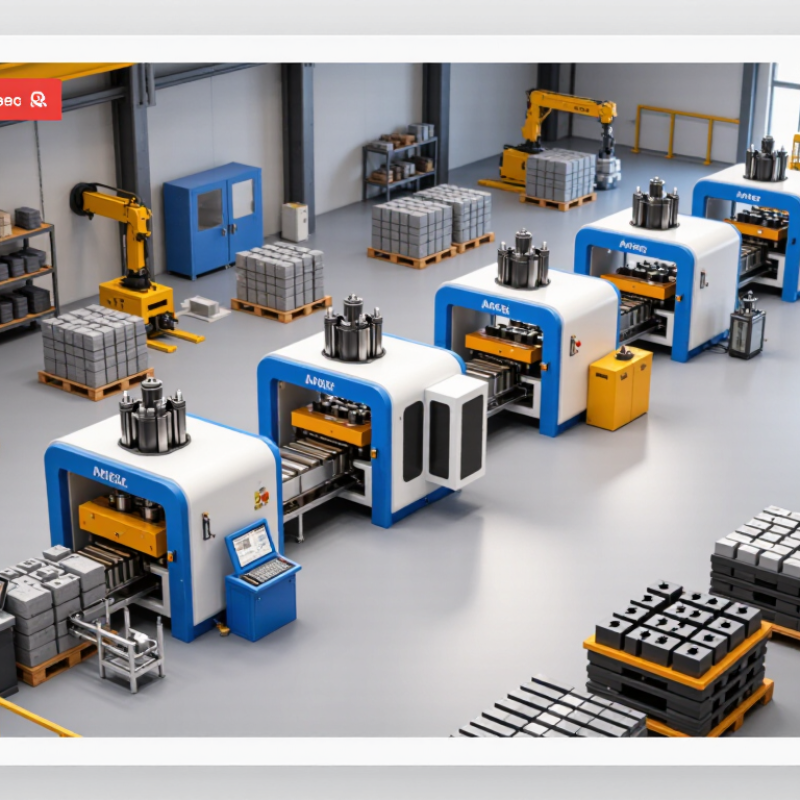
Block Forming Machines: Types, Functions, and Core Applications
Block forming machines convert measured concrete mixes into consistent masonry units through controlled vibration and pressure. Their main types include hydraulic presses, mechanical presses, and fully automatic production lines. Hydraulic models suit medium-scale factories needing adjustable force and stable cycle control. Mechanical machines often offer simpler maintenance and lower initial costs. Automatic lines add batching, conveying, curing, and palletizing equipment.
The core function is repeatable compaction. A mold shapes the mixture while vibration removes air pockets. Feeders control material volume, and sensors monitor mold position, pressure, and cycle time. Operators should check moisture content often, because a dry mix can crumble and an overly wet mix may deform. This small detail affects strength, surface texture, and dimensional accuracy. Practical trials with local aggregates remain important. Imported settings do not always transfer perfectly.
These machines produce hollow blocks, solid blocks, paving units, curbstones, and specialized landscape products. Construction contractors use them for walls, drainage works, roads, and small infrastructure projects. Buyers should match mold size, output targets, available labor, and curing space before choosing equipment. A high output figure means little when pallets wait outside in poor weather. That happens. Reliable operation also depends on spare parts, operator training, guarding, and documented quality checks. Production plans often change after installation, so adjustment space matters. A technically excellent machine can still be unsuitable for the site.
10 Best Block Forming Machines for Global Buyers
Block Forming Machines: Types, Functions, and Core Applications
The chart compares common block-forming machine categories by indicative production capacity. Manual and semi-automatic machines are suitable for small construction projects and developing markets, while automatic and high-pressure systems are better suited to continuous commercial production. Actual output depends on block size, raw-material mix, curing method, mold configuration, and operator experience.
Key Factors for Comparing Block Forming Machines Worldwide
10 Best Block Forming Machines for Global Buyers
Key Factors for Comparing Block Forming Machines Worldwide
Choosing among the 10 best block forming machines requires more than checking production speed. According to the International Energy Agency’s 2023 cement report, cement production reached about 4.1 billion tonnes in 2022. The sector also creates nearly 7% of global energy-related emissions. Energy demand should therefore be measured per finished block, not only per operating hour. Ask for verified output data under your local mix, moisture level, and curing conditions.
Machine comparison should include mold flexibility, vibration control, maintenance access, and spare-part availability. A machine producing 10,000 blocks daily may perform poorly with unstable aggregates or frequent mold changes. The World Bank’s Logistics Performance Index 2023 shows major differences in customs efficiency and delivery reliability between markets. This makes local technical support, packaging quality, and lead time practical buying factors. Safety guarding and electrical compatibility matter too. Standards are not identical worldwide. Confirm voltage, documentation, and testing requirements before payment.
Tips: Request a factory acceptance test using your own mix design. Record cycle time, block density, noise, and rejected units. Check three months of spare-part consumption. A low purchase price can hide expensive downtime. I have seen buyers compare only hourly capacity, then revise their calculations after installation. That approach is understandable, but incomplete. Also question impressive laboratory figures. Real sites are dusty, humid, and rarely perfectly staffed. Reliability deserves a separate score.
10 Best Block Forming Machines for Global Buyers - Key Factors for Comparing Block Forming Machines Worldwide
The figures below represent common market ranges for new equipment. Actual output depends on block size, mix design, curing conditions, mold configuration, operator skill, and local electrical standards.
| Rank | Machine Profile | Forming Method | Typical Products | Nominal Output (Standard Blocks/Hour) | Typical Cycle Time | Installed Power Range | Automation Level | Typical Mold Capacity | Recommended Buyer | Key Comparison Factor | Overall Fit |
|---|---|---|---|---|---|---|---|---|---|---|---|
| 1 | Fully Automatic Hydraulic Vibropress | Hydraulic pressure combined with vibration | Hollow blocks, solid blocks, pavers, curbstones | 1,500–3,000 | 10–20 seconds | 25–60 kW | High; automatic feeding, forming, pallet transfer, and stacking | 4–12 standard blocks | Large contractors and commercial block plants | High throughput, consistent density, and reduced labor | ★★★★★ |
| 2 | Automatic Multi-Layer Block Machine | Vibration and hydraulic compaction with layer stacking | Hollow blocks, solid blocks, landscaping units | 1,200–2,400 | 12–22 seconds | 20–45 kW | High; designed for automated production lines | 4–10 standard blocks | Buyers with limited floor space and high daily demand | Reduced pallet handling and efficient factory layout | ★★★★★ |
| 3 | High-Pressure Paver and Concrete Product Press | Hydraulic pressing with controlled vibration | Interlocking pavers, paving slabs, curbs, tiles | 800–1,800 equivalent blocks/hour | 12–25 seconds | 25–55 kW | Medium to high; often integrated with automatic batching and stacking | 6–24 pavers, depending on mold size | Infrastructure contractors and landscaping suppliers | Surface quality, dimensional accuracy, and mold flexibility | ★★★★★ |
| 4 | Semi-Automatic Hydraulic Block Machine | Hydraulic compaction with manual or assisted material handling | Hollow blocks, solid blocks, basic pavers | 600–1,200 | 15–30 seconds | 12–30 kW | Medium; forming is automated but handling may be manual | 2–8 standard blocks | Small and medium-sized regional producers | Lower capital cost and simpler maintenance | ★★★★☆ |
| 5 | Mobile Egg-Laying Block Machine | Vibration and compaction directly on the production floor | Hollow blocks, solid blocks, small paving units | 500–1,200 | 15–35 seconds | 10–25 kW | Medium; the machine moves between fresh production areas | 2–8 standard blocks | Projects with limited infrastructure or frequent site relocation | Low pallet requirements and flexible on-site production | ★★★★☆ |
| 6 | Stationary Vibropress | Mechanical or hydraulic vibration and compression | Standard hollow blocks, solid blocks, masonry units | 400–900 | 18–35 seconds | 8–20 kW | Low to medium; manual material and pallet handling is common | 2–6 standard blocks | Entry-level manufacturers and local building-material suppliers | Purchase price, operating simplicity, and spare-parts access | ★★★★☆ |
| 7 | High-Output Hollow Block Machine | Vibration-assisted hydraulic compaction | Hollow masonry blocks in multiple wall thicknesses | 700–1,500 | 14–28 seconds | 15–35 kW | Medium to high, depending on feeding and stacking equipment | 4–12 hollow blocks | Residential construction markets with steady block demand | Interchangeable molds and stable cavity dimensions | ★★★★☆ |
| 8 | Solid Block Forming Machine | Vibration and compression for dense concrete products | Solid blocks, foundation units, retaining-wall units | 600–1,800 | 12–30 seconds | 12–30 kW | Medium; automation varies by feeding and stacking system | 2–10 solid blocks | Markets requiring high-density structural or foundation units | Compaction force, product weight, and mold wear resistance | ★★★★☆ |
| 9 | Modular Interlocking Paver Machine | Hydraulic pressing with vibration-controlled finishing | Interlocking pavers, colored pavers, garden tiles | 400–1,200 equivalent blocks/hour | 15–30 seconds | 15–40 kW | Medium; color-feeding and stacking options are available | 6–24 pavers, depending on mold pattern | Landscaping businesses and municipal paving suppliers | Pattern changes, color-layer control, and finish consistency | ★★★★☆ |
| 10 | Compact Small-Batch Block Machine | Basic vibration or hydraulic compression | Small hollow blocks, solid blocks, garden units | 200–600 | 20–45 seconds | 5–15 kW | Low to medium; manual loading and demolding are typical | 1–4 standard blocks | Start-up producers, rural builders, and low-volume buyers | Low investment, simple operation, and local serviceability | ★★★☆☆ |
Output is stated for comparison using standard concrete masonry blocks approximately 390 × 190 × 190 mm. Paver output can vary significantly because mold layouts and product dimensions differ.
Ten Leading Block Forming Machine Categories for Global Buyers
Global buyers can evaluate ten leading block forming machine categories by matching output, block design, and site conditions. Hydraulic block forming machines suit dense production and consistent pressure. Automatic machines reduce manual handling, while semi-automatic models often fit smaller plants and tighter budgets. Hollow block machines lower material use and support common wall construction. Solid block machines produce heavier units for foundations, retaining walls, and industrial work.
Paving block machines require controlled vibration and accurate mold filling. Interlocking block machines need precise dimensions, especially where joint alignment affects installation speed. Curb stone machines support road edges, drainage lines, and landscape projects. Lightweight block machines handle lower-density mixes, but their curing process demands closer moisture control. Mobile block forming machines help contractors produce units near changing construction sites. They can reduce transport costs, though uneven ground may affect calibration.
A practical assessment should include mold-change time, motor power, spare-part access, and local voltage compatibility. Experienced operators inspect fresh blocks for chipped corners, poor compaction, and uneven height. Small trial batches reveal more than a polished brochure. Confirm production figures under your actual mix design, not ideal laboratory conditions. Certification and documented testing improve procurement reliability. Maintenance remains easy to underestimate. Dust, wet aggregates, and rushed lubrication can shorten service life. A cheaper machine may become expensive when downtime, training, and replacement molds are ignored. Reliability is measured over months, not during one successful demonstration.
Production Capacity, Automation, and Material Compatibility
10 Best Block Forming Machines for Global Buyers
Production Capacity, Automation, and Material Compatibility
Selecting among the ten best block forming machines requires more than comparing hourly output. Production capacity should reflect mold size, cycle time, curing space, and actual uptime. A machine claiming 20,000 blocks daily may perform differently under humid conditions or frequent mold changes. In practical plant evaluations, buyers should request tested output using their own mix. Small delays can reduce capacity quickly. More is not always better.
Automation affects consistency, labor requirements, and maintenance planning. Useful systems include automatic material feeding, vibration control, pallet handling, and fault alerts. Sensors can monitor pressure and cycle timing, while simple controls may be easier to repair in remote regions. Fully automated equipment sounds attractive, but complicated systems can create expensive downtime. This part deserves honest review.
Tips: Test several material recipes before purchasing. Confirm compatibility with cement-based concrete, sand, stone powder, and approved recycled aggregates. Check moisture tolerance and maximum particle size. Ask for mold-change time, spare-part availability, operator training, and energy consumption. A machine that handles one strong mix may struggle with another. Keep a small sample record from every trial, even when the results look acceptable.
Installation, Maintenance, Costs, and International Purchasing Tips
Choosing among the 10 best block forming machines for global buyers requires more than comparing production rates. In field installations, foundation errors often cause greater trouble than machine settings. Measure the workshop entrance, floor load, drainage, and storage area before ordering. A level concrete pad reduces vibration and uneven block dimensions. Confirm local voltage, frequency, and compressed-air requirements. Ask for installation drawings, wiring diagrams, lifting points, and commissioning support. Remote guidance helps, but it cannot replace skilled technicians when alignment is poor. Allow safe space around the machine. Small layout mistakes become expensive later.
Maintenance begins with daily cleaning. Remove cement dust from molds, sensors, and moving rails before it hardens. Inspect mold edges, fasteners, hydraulic hoses, and lubrication points each week. Keep a simple service log with dates, photos, and replaced parts. Stock common items, including seals, switches, sensors, and mold components. Some teams delay maintenance until failures occur. That approach rarely saves money. Still, replacing every part too early can waste funds. Follow the manual, then compare it with actual wear. Responsibility must be assigned clearly. Perfect maintenance forecasts are unrealistic.
The purchase price is only one cost. Include freight, cargo insurance, import duties, inland delivery, installation labor, training, energy use, molds, and spare parts. Request a clear quotation with payment terms, warranty limits, delivery conditions, and acceptance criteria. Verify the supplier’s legal details, technical references, and after-sales response time. Check container dimensions and local customs requirements before shipment. Exchange-rate changes can affect the final budget. A cheaper machine may cost more when spare molds arrive slowly. Compare the cost per usable block. Do the calculation twice.
