How to Choose the Right Blanking Die for Your Production Needs?
Choosing the right Blanking Die can significantly affect your production process. A suitable blanking die ensures precision and efficiency in manufacturing. The decision requires careful consideration of various factors.
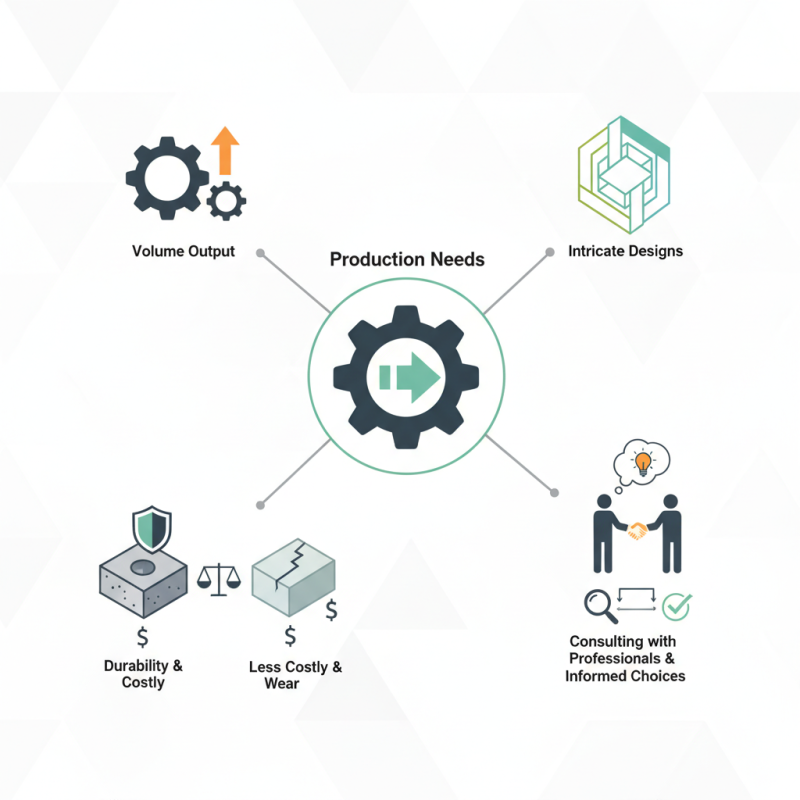
Understanding your production needs is essential. Some industries demand high-volume output, while others focus on intricate designs. The type of material used for the die also matters. Some materials might offer durability but could be more expensive. Others may be less costly but wear out faster. It's key to balance cost and quality.
Consulting with professionals can provide insights. Experience in selecting a blanking die can guide you in making informed choices. It's vital to analyze your unique requirements before making a purchase. Missteps in this area can lead to increased costs and wasted time. Ultimately, a well-chosen blanking die enhances production efficiency and product quality.
Understanding the Basics of Blanking Dies in Manufacturing
Blanking dies play a crucial role in manufacturing processes. They are essential for producing simple shapes from materials like metal or plastic. Understanding their design and function can significantly impact production efficiency. According to a recent industry report, the global demand for blanking services is expected to grow by 6% annually through 2025.
Different types of blanking dies exist, tailored for various applications. For instance, progressive dies allow for multiple operations, enhancing efficiency. In contrast, single operation dies are simpler but may not be suitable for complex shapes. Statistics show that over 70% of manufacturers prefer progressive dies for high-volume production. However, they come with a higher initial cost and maintenance requirements.
Choosing the right blanking die involves considering production volume, material type, and complexity. Many manufacturers struggle with these decisions, often leading to inefficiencies. A well-researched choice can yield favorable results. However, manufacturers should also reflect on past mistakes, as poor die selection can halt production and increase costs. Investing time in understanding blanking die basics can provide invaluable insights for future projects.
Identifying Your Production Requirements for Blanking Dies
Choosing the right blanking die requires a clear understanding of your production needs. Begin by assessing the type of materials you will be working with. Different materials demand different die properties. For instance, softer materials might require less robust dies, while harder ones will need more durable options. Identifying the thickness of the material is equally important. A thicker material would likely need more force and precision in the die design.
Tips: Always conduct a test run with your chosen die to ensure compatibility. Adjustments may be necessary based on the initial results. This trial phase can reveal hidden issues, paving the way for improvements.
Next, consider the complexity of the shapes you want to produce. Intricate designs may require specialized dies, while simple cuts can use standard options. Don’t underestimate the impact of production volume. High-volume production may justify investing in custom dies, ensuring efficiency and reducing long-term costs.
Tips: Collaborate with experienced die makers to share your specific needs and constraints. Their insights can help refine your approach and prevent costly mistakes. Remember, adapting your strategy based on feedback is crucial for optimal results.
Evaluating Different Types of Blanking Dies Available
When evaluating different types of blanking dies, consider the materials used in manufacturing. Steel dies are common and provide durability. However, they can be expensive to produce. Aluminum dies are lighter and more cost-effective, but may wear down faster. The choice of material directly impacts production longevity and efficiency.
Another crucial factor is the die configuration. A simple design is easier to maintain but may limit adaptability. Complex dies offer flexibility but require more maintenance and careful setup. It's vital to assess your production volume and the variety of parts needed. Adjusting to fluctuating needs can be challenging with certain dies.
Additionally, think about the die's compatibility with your existing machinery. Compatibility issues can lead to downtime or increased operational costs. Custom solutions might seem ideal but require upfront investment and time. Reflect on your production goals and choose a die that aligns with them. Balancing these aspects can lead to more efficient manufacturing processes.
Comparison of Different Types of Blanking Dies
Key Factors to Consider When Selecting a Blanking Die
Choosing the right blanking die is crucial for efficient production processes. When selecting a die, consider material compatibility. For instance, steel and aluminum require different die specifications. A report from the Metal Forming Association indicates that poor material selection leads to up to 20% increased production costs.
Die geometry is another vital factor. The shape and depth of the die can affect the quality of the blanks produced. A study published in the Journal of Manufacturing Science highlighted that nearly 15% of defects arise from improper die shape. Evaluating the die's design is essential. Inconsistencies can lead to misalignment during the blanking process.
Lastly, the production volume should inform your choice. High-volume production may benefit from more durable dies, potentially increasing upfront costs but lowering long-term expenses. The Society of Manufacturing Engineers states that a well-chosen die can extend its lifespan by 30%. Therefore, reflect on these factors carefully. Selecting a die isn't just about immediate needs; it's about future sustainability.
Tips for Optimizing Blanking Die Performance in Your Operations
When optimizing blanking die performance, understanding material behavior is crucial. According to a recent industry report, 30% of die failures stem from incorrect material selection. Choosing the right steel type can significantly impact the die's longevity. For instance, tool steels like D2 offer durability, but may not be suitable for every application. Some operations report high wear rates when using D2 for softer materials. Evaluating material properties closely helps avoid these issues.
Another factor is die maintenance. Regular inspections can prevent unexpected downtimes. Data shows that companies implementing scheduled maintenance reduce die failure rates by up to 20%. Yet, many overlook this aspect, leading to unplanned production halts. Documenting wear patterns can provide insights into when a die needs replacement. Understanding these patterns helps maintain efficiency and reduces costs, allowing businesses to remain competitive.
Finally, the design of the blanking die itself influences overall performance. Engaging in simulation software during the design phase can expose potential flaws early. Surprisingly, many manufacturers still rely on traditional methods, missing out on advanced solutions. Investing in technology can streamline processes, improving output quality and reducing scrap rates. Not recognizing the benefits of modern design tools could hinder growth in today's fast-paced market.
How to Choose the Right Blanking Die for Your Production Needs?
| Criteria | Description | Importance Level |
| Material Type | Consider the material being processed to ensure die compatibility. | High |
| Tolerances | Identify the required tolerances for your parts to ensure precision. | Critical |
| Production Volume | Assess the volume of parts needed to determine die durability. | Medium |
| Die Design | Evaluate die design features to align with production needs. | High |
| Lead Time | Consider the time required for die manufacturing and setup. | Medium |
| Maintenance Requirements | Review maintenance needs to ensure continuous operation. | Low |