
10 Forklift Equipment Buying Tips for Global Buyers?

Buying Forklift Equipment across borders is not simply a price comparison. It is a decision about safety, productivity, service access, and long-term operating cost.

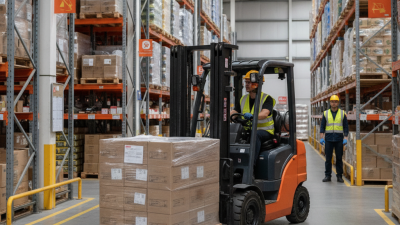
A warehouse in Rotterdam may need narrow-aisle precision. A construction site in Nairobi may require stronger tires, higher ground clearance, and dust-resistant components. Battery charging conditions, operator training, spare-part availability, and local service capacity can change the best choice completely. Rated capacity matters, but it is only one part of the picture. A truck lifting 3,000 kilograms may perform poorly if the load center, aisle width, or floor condition is wrong.

As materials-handling specialist Raymond B. Farley has said, “The right forklift is the one matched to the work, not merely the one with the highest capacity.” That principle deserves attention. Global buyers often compare brochures before observing the actual application. That is a mistake.

Walk the site. Measure the aisles. Photograph loading areas. Record daily lift heights and working hours. Ask who will maintain the equipment after delivery. These details expose hidden costs early.

This guide presents ten practical buying tips for international purchasers. It considers equipment specifications, energy systems, operator visibility, supplier reliability, documentation, and after-sales support. Some recommendations may seem obvious. They are still missed.

No purchase is perfect. Market data can be incomplete, and operating conditions can change. A careful buyer reviews assumptions before signing, then confirms them with operators, technicians, and experienced dealers.
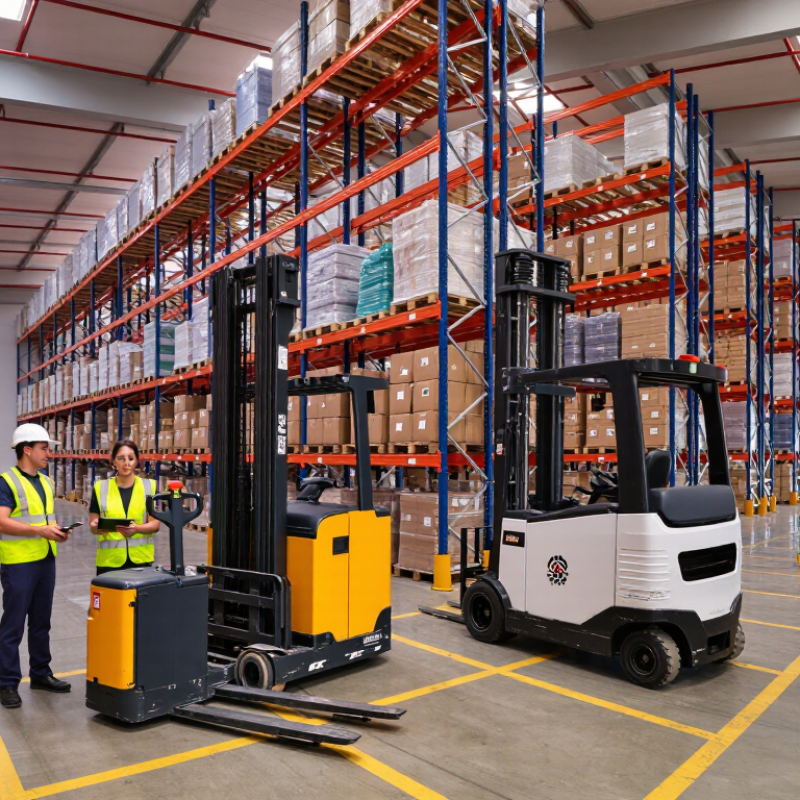
10 Forklift Equipment Buying Tips for Global Buyers?

Define Your Material Handling Needs and Operating Conditions

Before comparing forklift prices, define the work it must perform. Record load weights, dimensions, lifting heights, travel distances, and daily operating hours. A 3,000-kilogram load is not enough information. Its center of gravity matters too.

Measure the actual workplace. Note aisle widths, floor strength, dock edges, ramps, lighting, ventilation, and indoor temperatures. Electric equipment may suit enclosed areas, while combustion equipment can create ventilation concerns. U.S. OSHA estimates that powered industrial trucks cause about 85 workplace fatalities and 34,900 serious injuries each year. These figures make operator visibility, stability, braking, and training purchasing requirements, not optional features.

Work patterns also influence the specification. MHI’s 2024 Annual Industry Report found that 43% of supply chain professionals planned to adopt robotics and automation within the next one to two years. A forklift may need fleet connectivity, impact monitoring, or automated traffic controls. However, technology cannot repair poor route design. That is an uncomfortable point. We sometimes overestimate smart functions and underestimate maintenance access. Ask operators to describe battery changes, charging locations, common floor damage, and peak-season pressure. Test those answers against real shift records. A short site trial can expose turning problems that a brochure hides. Also check local safety rules, service capability, spare-parts availability, and the total cost of ownership before choosing capacity or power type.

Forklift Equipment Buying Tip: Match Rated Capacity to Your Operating Conditions

Define the load weight, load center, travel surface, indoor or outdoor use, and required lift height before selecting equipment. The chart shows representative rated-capacity ranges commonly used for different forklift configurations.

Representative industry capacity ranges are shown in pounds. Actual capacity depends on load center, lift height, attachments, mast configuration, surface conditions, and the manufacturer’s data plate.

Compare Forklift Types, Capacities, and Power Options

Global buyers should compare forklift types before comparing prices. The World Industrial Truck Statistics report recorded more than two million industrial truck deliveries worldwide in 2023. Electric models represented roughly two-thirds of reported demand, reflecting growth in warehouses and indoor operations. Still, power choice depends on duty cycle, ventilation, charging access, and local energy costs.

Capacity numbers need careful reading. A truck rated at 2,500 kilograms may reach that rating only at a specified load center. The ANSI/ITSDF B56.1 safety standard links capacity to load center, mast height, attachments, and operating conditions.

Measure the actual pallet, not the average pallet. A 1,200-kilogram load positioned farther forward can reduce practical capacity sharply. Narrow aisles may favor reach trucks, while uneven yards usually require rough-terrain equipment.

Power options create different compromises. Lead-acid batteries remain familiar and often cost less initially. Lithium-ion systems can support opportunity charging and reduce battery-changing work. The International Energy Agency reported a 14% decline in average lithium-ion battery pack prices during 2023, but forklift economics still depend on charger installation and electricity tariffs.

Internal-combustion equipment can suit long outdoor shifts, yet fuel storage, emissions, and ventilation require attention. Do not trust a neat spreadsheet alone. Test turning clearance with a loaded truck, record real shift hours, and check residual-capacity charts before purchase. One overlooked detail can reshape the entire buying decision.

Check Safety Standards, Certifications, and Regional Compliance

10 Forklift Equipment Buying Tips for Global Buyers

When purchasing forklifts internationally, safety compliance should guide the decision, not just the purchase price. Ask for the rated load chart, stability data, operator manual, and maintenance schedule. Check whether the machine meets recognized safety standards for industrial trucks in its intended market. Requirements may differ between regions, especially for braking systems, visibility, alarms, emissions, and electrical protection.

Ask for evidence. Paperwork is not enough.

Review certificates issued by qualified testing or conformity bodies, and confirm that the documents match the exact model, mast height, battery type, and attachments. A certificate for a standard configuration may not cover a side-shift device or a taller lift assembly. Inspect the identification plate carefully. It should show capacity, load center, serial information, and operating limits. Missing details deserve attention.

Regional compliance also includes workplace rules, import documentation, charger compatibility, and operator training requirements. A forklift approved in one country may need additional assessment elsewhere. Speak with a local safety consultant or authorized inspection service before shipment. This step can prevent expensive delays at customs or during site approval.

Consider the working environment in practical terms. A cold warehouse, uneven yard, or narrow aisle changes the safety calculation. Ask for service records and spare-parts availability in your region. Some buyers focus heavily on certification and overlook after-sales support. That is a mistake worth admitting. Compliance protects people, but daily maintenance keeps that protection real.

Evaluate Suppliers, Equipment Quality, and After-Sales Support

10 Forklift Equipment Buying Tips for Global Buyers

Supplier evaluation should begin with evidence, not polished product photos. Request factory audit records, serial-number traceability, load charts, and test certificates. A dependable supplier should explain who builds the mast, controller, battery, and safety systems. Ask for references from buyers operating in similar climates and duty cycles. In my sourcing experience, vague answers usually become expensive delays later.

Equipment quality must be checked under realistic conditions. Test lifting stability, braking distance, steering response, hydraulic noise, and battery performance with a representative load.

OSHA reports that powered industrial trucks contribute to about 85 fatal accidents and 34,900 serious injuries annually in the United States.

That figure makes safety documentation more than paperwork. Check compliance with applicable standards, including ISO 5053-1, and verify that manuals match the delivered configuration. Small details matter. A missing load chart is a warning.

After-sales support often separates a useful machine from a stranded asset. Confirm warranty duration, excluded parts, technician response times, software access, and local spare-parts inventory. Request a written maintenance schedule and emergency escalation process.

The U.S. Department of Energy notes that battery charging efficiency and maintenance affect industrial equipment operating costs; this deserves attention when comparing electric models. Do not accept “global support” without regional contact names and response targets.

I would also negotiate training for operators and technicians. Even then, my evaluation may be incomplete; suppliers can perform well during inspection and poorly after payment. Review support performance quarterly, not only when a breakdown occurs.

Calculate Total Ownership Costs, Delivery Risks, and Warranty Coverage

10 Forklift Equipment Buying Tips for Global Buyers

Buying a forklift across borders requires more than comparing purchase prices. Field assessments often show low quotes becoming expensive after batteries, training, parts, and port handling. Build a total ownership model before signing. Include purchase cost, freight, customs charges, energy use, service, tires, downtime, and resale value. Ask for consumption data under your expected load. Showroom conditions can mislead. A machine running eight hours daily needs different calculations.

Tip: Request a five-year cost sheet with clear assumptions. If key costs remain vague, treat them as risks.
Delivery Risk

Delivery risk deserves separate attention. Confirm production time, export documents, inland transport, and unloading requirements. A delayed machine can disrupt warehouse expansion. Missing battery details can also delay commissioning. Set written milestones and define responsibility for transit damage. Consider backup rental only when delays threaten operations. I once underestimated local unloading limits. The machine arrived, but the access route needed extra preparation. That mistake was avoidable.

Tip: Ask for package dimensions, shipping weight, insurance scope, and inspection photos before dispatch.
Warranty Coverage

Warranty coverage must match actual working conditions. Check duration, hour limits, covered components, labor, travel, batteries, and response times. Confirm whether qualified technicians operate near your site. A long warranty means little if a small part takes six weeks to arrive. Request exclusions in plain language. Pay attention to corrosion, overload, charging, and maintenance conditions. Do not assume verbal promises apply across borders. Local legal and technical review is worth the cost.