What is an Industrial Monitor and Why is it Important?
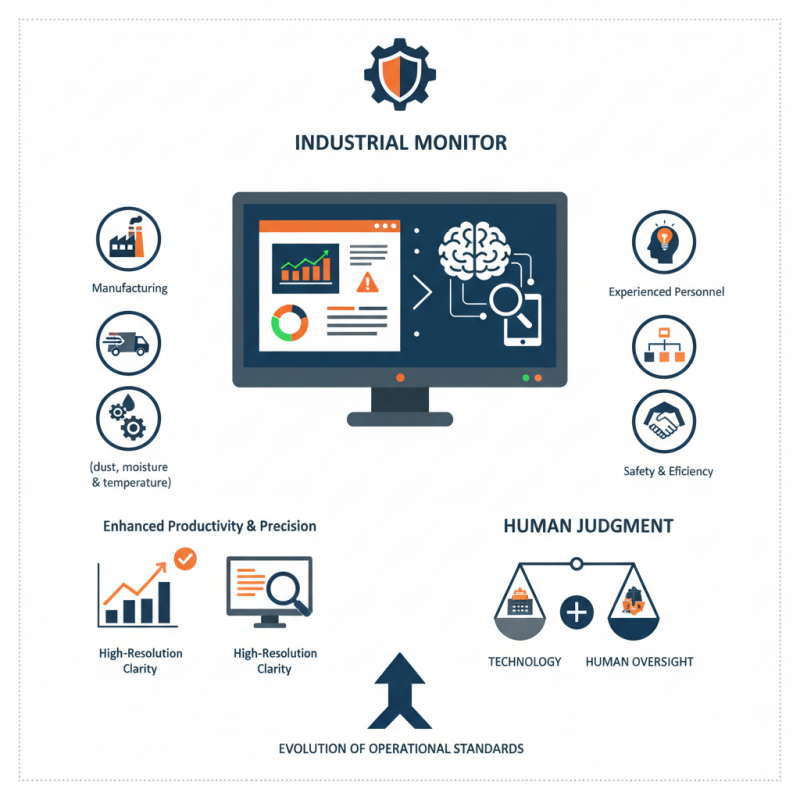
In today’s industrial landscape, the use of an Industrial Monitor is becoming increasingly vital. These specialized displays are designed to withstand harsh environments. They offer robust performance where standard monitors often fail. Industries such as manufacturing and logistics rely on these monitors for daily operations. Their importance cannot be overstated.
An Industrial Monitor enhances productivity and ensures precision in various tasks. Their durability meets the needs of environments filled with dust, moisture, and temperature fluctuations. High-resolution screens provide clarity for operators. This clarity can be crucial for making quick decisions that affect safety and efficiency.
However, relying solely on technology can lead to overconfidence. Human judgment is still essential in monitoring complex systems. While Industrial Monitors provide valuable data, the interpretation of that data requires experienced personnel. Balancing technology and human oversight is crucial in modern industry. Overall, Industrial Monitors play a key role in the evolution of operational standards.
What Defines an Industrial Monitor and Its Unique Features?
Industrial monitors are essential in various manufacturing environments. They provide visual feedback on processes, equipment status, and operational data. Unlike standard monitors, industrial monitors are built to endure harsher conditions. They often feature rugged casings that resist dust, moisture, and extreme temperatures. This durability ensures continuous operation in challenging settings, enhancing productivity.
What sets industrial monitors apart is their advanced display technology. These monitors often possess high brightness levels for visibility in well-lit environments. Touchscreen interfaces are also common, allowing for easier interaction with complex machinery. Moreover, they support various connectivity options like HDMI, VGA, and USB. This versatility ensures seamless integration into different systems.
Nevertheless, one must consider the limitations of industrial monitors. Some users may find the initial investment higher compared to consumer models. Regular maintenance is also essential to sustain optimal performance. Misjudging the monitor's specifications can lead to operational issues. Users should be mindful of these factors when selecting an industrial monitor for their applications.
Key Differences Between Industrial Monitors and Consumer Displays
Industrial monitors are essential in various sectors. They are different from consumer displays in several key ways. First, industrial monitors are built to withstand challenging environments. They often have higher durability and can operate efficiently in extreme temperatures. A report by Grand View Research states that the industrial display market is expected to reach $28 billion by 2025. This shows a strong demand for reliable monitoring solutions in industrial settings.
Another significant difference lies in the display technology used. Industrial monitors often prioritize clarity and brightness, essential for direct sunlight environments. They typically offer higher contrast ratios, making them suitable for critical applications. A study by MarketsandMarkets highlights that industrial monitors also provide extended lifespans, often exceeding 50,000 hours of use.
While consumer displays focus on aesthetics, industrial monitors emphasize functionality. They often come with additional features like touch capabilities and customizable resolutions. Users may find that consumer-grade displays fall short in meeting specific industrial requirements. Challenges arise when decision-makers underestimate the importance of these features. Industrial settings require careful evaluation of display capabilities, especially in complex operational environments.
The Role of Industrial Monitors in Enhancing Operational Efficiency
Industrial monitors play a crucial role in enhancing operational efficiency across various sectors. These specialized displays are designed to withstand harsh environments, including dust and temperature extremes. Unlike standard monitors, industrial monitors offer features like increased durability and enhanced visibility. They help workers access real-time data, which is essential for informed decision-making.
In manufacturing, operators rely on these monitors to track production metrics swiftly. Data is displayed visually, enabling immediate responses to issues. However, relying solely on technology can lead to oversights. Human judgment still plays a vital role in interpreting data correctly. Therefore, a balance must be struck between using monitors and developing staff capabilities.
Maintaining and updating these monitors is another challenge. Technological advancements happen rapidly. Regular upgrades are necessary to ensure systems operate efficiently. Some organizations may struggle with high costs related to these updates. Thus, strategic planning is essential to maintain a competitive edge in industrial settings.
Market Trends: Growth and Adoption of Industrial Monitors in Various Sectors
The industrial monitor market is experiencing notable growth across various sectors. These devices are becoming essential in manufacturing, logistics, and automation industries. Increased demand for efficiency drives the adoption of these monitors. Companies are seeking ways to improve productivity and enhance operational visibility.
Industries like oil and gas, food processing, and pharmaceuticals are integrating industrial monitors into their workflows. These devices offer real-time data access and visualizations, aiding in quick decision-making. For example, a manufacturing plant may use monitors to oversee production lines. However, the integration process is not always seamless. Companies often face challenges with compatibility and training.
As manufacturers refine their products, features like touchscreens and rugged designs are becoming standard. Yet, some still struggle with user interface issues. Feedback from end-users often highlights these areas for improvement. Continuous development is needed to meet diverse industrial needs and preferences. As adoption continues, ongoing dialogue between manufacturers and users is vital for enhancing overall effectiveness.
Impact of Industrial Monitors on Workplace Safety and Data Accuracy
Industrial monitors play a crucial role in enhancing workplace safety. These devices provide real-time data, allowing operators to detect hazards swiftly. For instance, they can alert workers to unsafe temperatures, pressure levels, or the presence of harmful gases. This immediate feedback fosters a proactive approach to safety, reducing the risk of accidents.
Moreover, the accuracy of data transmission is vital. Industrial monitors ensure that the information is precise and reliable. Inaccurate data can lead to poor decision-making, ultimately posing threats to safety. Consider scenarios where flawed readings result in equipment malfunctions. Such outcomes highlight the need for dependable monitoring systems in industrial settings.
However, reliance on technology comes with its own challenges. Industrial monitors can sometimes produce false readings due to environmental factors. It is essential for teams to interpret data critically. Investing in staff training to understand these devices enhances their effectiveness. Recognizing the limitations of monitoring technology is as important as celebrating its benefits.