


China Top 10 Three Phase Diesel Generator Manufacturers
China Top 10 Three Phase Diesel Generator Manufacturers examines a sector built around dependable electricity. Reliable ranking requires more than factory size or polished brochures. Buyers need tested output, fuel data, service reach, and transparent certifications. These details matter when a 400 kVA set starts under a hospital load. Small errors become expensive.
Industry reports show why this market deserves careful attention. The IEA’s Electricity 2024 report says data-center electricity demand could more than double by 2026. That growth increases demand for dependable standby power and faster maintenance. Grand View Research’s Diesel Generator Market report identifies industrial expansion, grid instability, and infrastructure investment as major market drivers. However, forecasts vary by region, generator rating, fuel type, and operating hours. That is a useful warning. Market size alone cannot prove manufacturer quality.
Rudolf Diesel, the pioneering German engineer, wrote, “The use of vegetable oils for engine fuels may seem insignificant today, but such oils may become, in the course of time, as important as petroleum and coal-tar products.” His words still encourage practical thinking about fuel and long-term efficiency. Modern buyers should ask harder questions. Who tested the alternator? How quickly can parts arrive? Does the warranty match real duty cycles? A cold morning start, a 70% step load, or a failed transfer switch can expose weak engineering quickly. This guide compares ten Chinese manufacturers through product breadth, testing evidence, engine partnerships, controls, emissions compliance, and after-sales capability. Some rankings remain subjective. That limitation deserves honesty. The strongest shortlist is not always the loudest one. Each supplier must earn confidence through measurable performance.
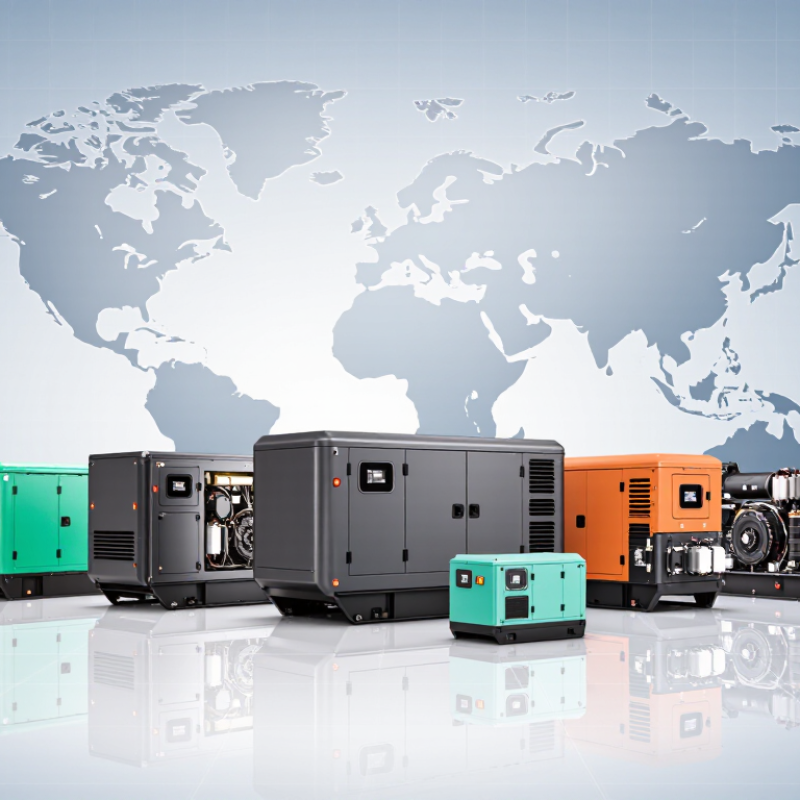
China’s Top 10 Three-Phase Diesel Generator Manufacturers: 2025 Overview
China’s Top 10 Three-Phase Diesel Generator Manufacturers: 2025 Overview
China’s three-phase diesel generator sector now serves construction, hospitals, factories, data centers, and remote infrastructure. This 2025 overview focuses on ten leading manufacturers, assessed through production depth, testing practice, engineering support, and export experience. The shortlist is not an official ranking. It is a practical buying reference.
The selected manufacturers generally offer 10 kVA to multi-megawatt systems, with 400/230V and 50Hz configurations widely available. Stronger suppliers provide load-bank testing, insulation checks, automatic transfer systems, and detailed fuel-consumption data. Some factories also build weatherproof and low-noise enclosures for urban projects. Check the details.
Professional buyers should inspect engine and alternator matching, controller functions, cooling performance, and spare-parts access. A factory visit can reveal more than a polished catalog. Look for clean assembly areas, traceable serial records, calibrated test instruments, and technicians who explain faults clearly. Certification matters, but paperwork alone cannot prove field reliability. Delivery schedules, warranty response, and local service coverage deserve equal attention. One weakness remains common: some suppliers describe rated power without clearly separating prime and standby output. That can distort project calculations. Request a complete technical sheet, test report, wiring diagram, and maintenance plan before comparing quotations.
China’s Top 10 Three-Phase Diesel Generator Manufacturers: 2025 Overview
| Rank | Anonymous Manufacturer Profile | Typical Prime Rating Range | Common Standby Rating Range | Output Voltage | Frequency / Speed | Phase / Power Factor | Control and Protection | Enclosure Options | Typical Compliance Basis | Best-Fit Applications |
|---|---|---|---|---|---|---|---|---|---|---|
| 1 | Profile A — large-scale integrated generator producer | 10–3,000 kVA | 11–3,300 kVA | 380/400/415 V, 50 Hz | 50 Hz / 1,500 rpm | 3-phase / 0.8 lagging | AMF, ATS, overload, short-circuit, low oil pressure | Open, silent, weatherproof, containerized | ISO 8528; ISO 9001-based production systems | Industrial plants, utilities, construction and data facilities |
| 2 | Profile B — export-oriented commercial generator producer | 8–2,500 kVA | 9–2,750 kVA | 220–480 V, 50/60 Hz | 50/60 Hz / 1,500–1,800 rpm | 3-phase / 0.8 lagging | Digital controller, AMF, ATS-ready, emergency stop | Open, acoustic canopy, trailer and containerized | ISO 8528; CE-oriented export configurations | Telecom, commercial buildings, farms and temporary power |
| 3 | Profile C — medium- and high-capacity project supplier | 50–2,250 kVA | 55–2,500 kVA | 400/415 V, 50 Hz | 50 Hz / 1,500 rpm | 3-phase / 0.8 lagging | Load sharing, synchronizing, alarms and shutdowns | Open, low-noise canopy and containerized | ISO 8528; project-specific inspection available | Factories, mines, oil and gas support, infrastructure projects |
| 4 | Profile D — compact and rental-power specialist | 10–1,000 kVA | 11–1,100 kVA | 220–480 V, 50/60 Hz | 50/60 Hz / 1,500–1,800 rpm | 3-phase / 0.8 lagging | Digital monitoring, remote start, overload protection | Silent canopy, mobile trailer and skid-mounted | ISO 8528; local electrical and safety requirements | Events, construction, emergency backup and rental fleets |
| 5 | Profile E — telecom and distributed-power supplier | 5–500 kVA | 5.5–550 kVA | 230/400 V, 50 Hz | 50 Hz / 1,500 rpm | 3-phase / 0.8 lagging | Remote alarms, auto-start, battery monitoring | Compact canopy and weatherproof outdoor cabinet | ISO 8528; telecom-site integration requirements | Cell sites, remote offices, railways and distributed facilities |
| 6 | Profile F — industrial OEM and private-label assembler | 20–2,000 kVA | 22–2,200 kVA | 380–480 V, 50/60 Hz | 50/60 Hz / 1,500–1,800 rpm | 3-phase / 0.8 lagging | PLC interface, ATS, synchronizing and load sharing | Open, acoustic, containerized and customized | ISO 8528; customer-specific certification packages | OEM projects, machine integration and industrial backup |
| 7 | Profile G — agricultural and small-business generator supplier | 8–800 kVA | 9–880 kVA | 220/380/400 V, 50 Hz | 50 Hz / 1,500 rpm | 3-phase / 0.8 lagging | Basic digital controller, ATS-ready, overload trip | Open frame and standard weatherproof canopy | ISO 8528; regional electrical requirements | Farms, workshops, retail premises and rural facilities |
| 8 | Profile H — data-center and mission-critical supplier | 500–3,000 kVA | 550–3,300 kVA | 400/415 V, 50 Hz | 50 Hz / 1,500 rpm | 3-phase / 0.8 lagging | Paralleling, load sharing, redundant monitoring and remote control | Acoustic enclosure and containerized power house | ISO 8528; project-based uptime and testing requirements | Data centers, hospitals, airports and financial facilities |
| 9 | Profile I — mining and heavy-duty mobile-power supplier | 100–2,500 kVA | 110–2,750 kVA | 400–480 V, 50/60 Hz | 50/60 Hz / 1,500–1,800 rpm | 3-phase / 0.8 lagging | Heavy-duty controller, engine protection and remote diagnostics | Reinforced canopy, skid-mounted and trailer-mounted | ISO 8528; site-specific environmental and safety standards | Mining, quarrying, oilfields, ports and remote infrastructure |
| 10 | Profile J — customized low-voltage and hybrid-system integrator | 15–1,500 kVA | 16.5–1,650 kVA | 220–480 V, 50/60 Hz | 50/60 Hz / 1,500–1,800 rpm | 3-phase / 0.8 lagging | Microgrid control, ATS, synchronizing and remote monitoring | Open, silent, containerized and hybrid-ready | ISO 8528; application-specific grid and safety standards | Microgrids, renewable-energy backup, commercial and municipal sites |
Note: The profiles are anonymized and summarize commonly published technical configurations in China’s three-phase diesel generator market. Actual ratings, engine configurations, emissions compliance, voltage options and certifications vary by model, export destination and project specification.