Ultimate Fork Lift Tips for Safe and Efficient Operation?
In the world of warehousing and logistics, mastering the use of a Fork Lift can significantly enhance productivity. Renowned industry expert, John Smith, once said, “Safety and efficiency are not just goals; they are a way of life in Fork Lift operations.” His insight emphasizes the importance of safe practices.
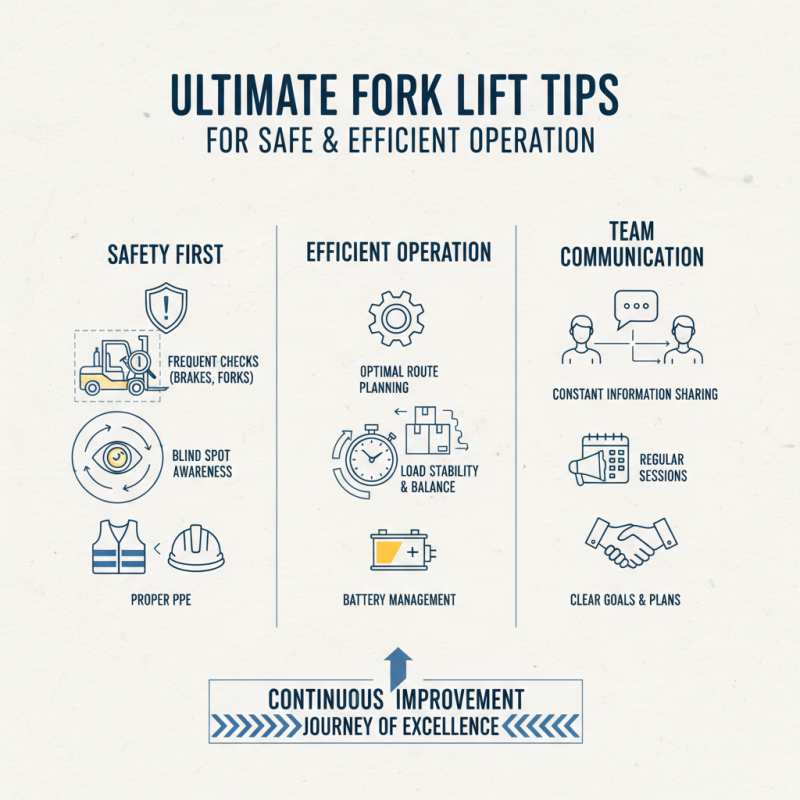
Operating a Fork Lift requires more than just technical skills. Operators must understand their surroundings to avoid accidents. Blind spots can be dangerous, and operators should be trained to identify them. Frequent safety checks on the Fork Lift are critical, too. Issues with brakes or forks can lead to serious problems. However, many overlook this step, which can have dire consequences.
Additionally, communication within a team is essential. Operators should share information constantly, yet often, this practice is neglected. People may assume everyone knows the plan, but that's not always true. Regular training sessions can help bridge this gap. Reflecting on these points reveals areas in Fork Lift operations that require attention. Improving safety and efficiency is an ongoing journey that demands commitment.
Understanding Forklift Types and Their Specific Uses
Forklifts are essential in many industries. They come in various types, each designed for specific tasks. Understanding these types can enhance workplace safety and efficiency.
Electric forklifts are popular in indoor settings. They produce less noise and zero emissions, making them ideal for warehouses. In fact, reports show that electric models can increase operational efficiency by up to 30%. However, their limited battery life can be a drawback. Users must plan charging times carefully to avoid disruptions.
In contrast, internal combustion engine forklifts excel outdoors. They can handle rough terrains and heavy loads. Despite their power, they emit pollutants, demanding attention to safety measures. According to industry studies, improper operation of such forklifts leads to nearly 30% of workplace accidents. Ensuring proper training is crucial for safety. The versatility of forklifts is impressive, but it requires cautious use and awareness of their limitations.
Forklift Types and Usage Efficiency
This bar chart represents the efficiency ratings of various forklift types commonly used in warehouse operations. The ratings are based on factors like load capacity, maneuverability, and operational speed. The Counterbalance forklift ranks the highest in efficiency, followed closely by Reach Trucks and Telehandlers, making them suitable for different operational scenarios in logistics.
Key Safety Regulations and Guidelines for Forklift Operation
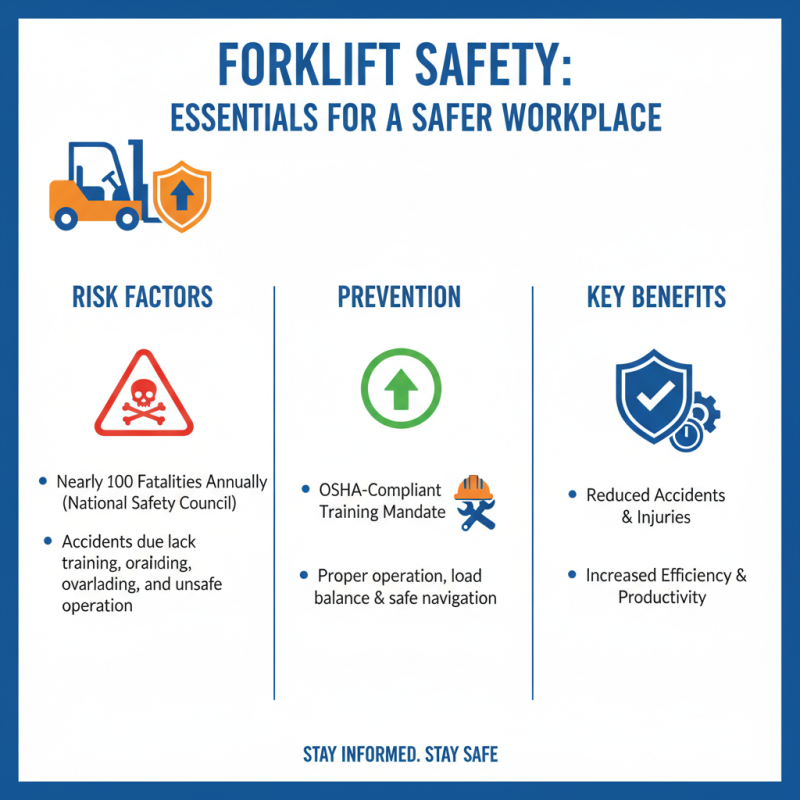
Forklifts are essential tools in many industries. However, their operation comes with inherent risks. According to the National Safety Council, nearly 100 fatalities occur each year due to forklift accidents. Understanding safety regulations can prevent these tragedies. Workers must be trained according to the Occupational Safety and Health Administration (OSHA) standards. Proper training ensures operators understand load limits and can navigate safely.
Adhering to safety guidelines is crucial. For example, load stability is key. Overloading a forklift can lead to tipping. The University of California reported that 25% of accidents are due to improper load handling. Operators should conduct daily inspections. This includes checking brakes, lights, and other vital components. Neglecting these checks can result in dangerous malfunctions.
Regular training sessions should not be overlooked. Unfortunately, many operators believe training is a one-time event. This misconception can lead to outdated practices. Up-to-date training covers new safety regulations and technology. It’s vital for workplaces to foster a culture of continuous learning. This can dramatically improve safety and efficiency on the job.
Essential Pre-Operation Checklist for Forklift Safety
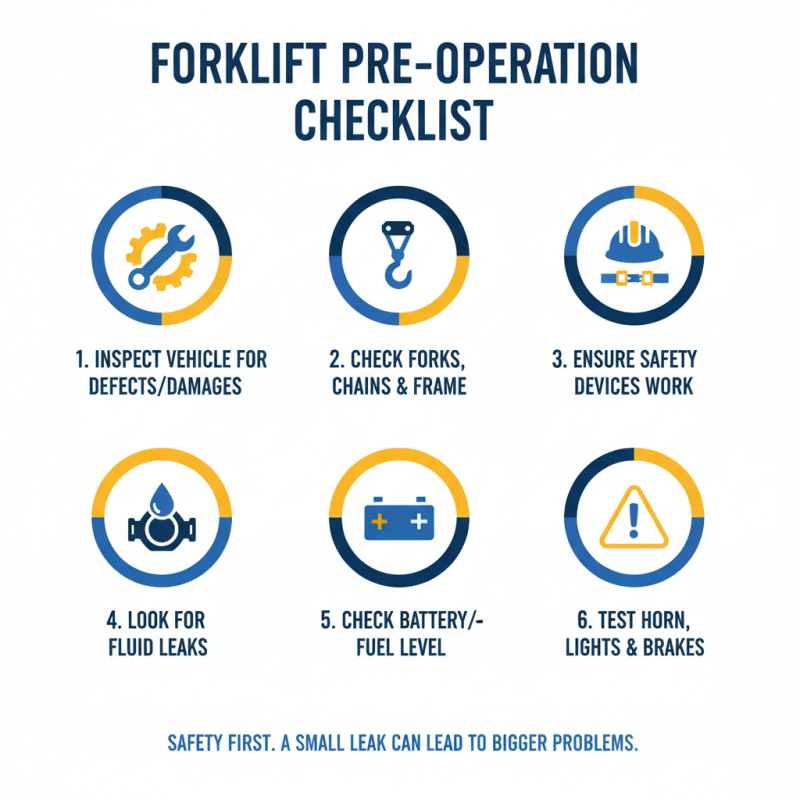
Before operating a forklift, a thorough pre-operation checklist is essential. Start by inspecting the vehicle for any defects or damages. Check the forks, chains, and overall frame. Ensure that all safety devices function properly. Look for fluid leaks under the forklift. A small leak can lead to bigger problems.
Make sure to test the horn, lights, and backup alarm. These features enhance safety significantly. After all, it’s better to address minor issues now than to face major accidents later. Perform a walk-around inspection before each shift. This difficult habit can save lives.
When piloting a forklift, always be aware of your surroundings. Avoid distractions while operating. Communicate with coworkers effectively, using hand signals when necessary. Speeding can lead to mishaps. Stay vigilant on ramps and inclines. Inadequate awareness might lead to property and personal damage. Remember, a few moments of care can prevent accidents.
Best Practices for Maneuvering and Load Handling
When operating a forklift, load handling is critical for safety and efficiency. According to the Occupational Safety and Health Administration (OSHA), around 100 fatalities occur annually due to forklift accidents. This highlights the importance of proper maneuvering and load management. Operators should always check their surroundings before moving. A clear path reduces risks significantly.
Proper load handling techniques can lead to safer workplaces. For instance, balancing the load on forks helps maintain stability. Loads should never exceed the forklift’s rated capacity. Excess weight can cause tipping. Rigging and securing loads properly bolster safety. Every operator should perform regular inspections to ensure equipment functions optimally.
Efficient maneuvering requires clear communication among team members. Establishing hand signals for operation can improve coordination. However, not all teams practice this consistently. Some employees neglect basic protocols. Regular training sessions could reinforce safe practices, but they may not be prioritized. These are areas that require improvement to enhance workplace safety.
Regular Maintenance and Inspection for Forklift Efficiency
Regular maintenance of forklifts is crucial for safe operation. A well-maintained forklift is less likely to malfunction. Operators should check fluid levels regularly. This includes oil, hydraulic fluid, and coolant. Neglecting these checks can lead to severe issues. A single leak can create safety hazards on the job site.
Inspection before every shift is a necessary practice. Operators must look for wear and tear on tires and forks. A damaged fork can drop a load, causing danger to nearby workers. Listening for unusual sounds during operation is also important. Strange noises often signal deeper mechanical problems. Ignoring these signs could lead to costly repairs.
Documentation plays a significant role in maintenance. Keeping logs of inspections and repairs is essential. It helps track the forklift's condition over time. However, many overlook this step, creating potential gaps in safety. A clear record can aid in identifying recurring issues. Regular reviews can provide insights into trends and necessary training for operators.
Ultimate Fork Lift Tips for Safe and Efficient Operation - Regular Maintenance and Inspection for Forklift Efficiency
| Maintenance Task |
Frequency |
Details |
Importance |
| Oil Change |
Every 250 hours |
Changing forklift oil to ensure optimal engine performance. |
Critical |
| Tire Inspection |
Monthly |
Check for wear and tear, proper inflation. |
High |
| Brake System Check |
Every 500 hours |
Inspect brake fluid levels and overall system effectiveness. |
High |
| Battery Maintenance |
Weekly |
Check connections, charge level, and clean terminals. |
Very High |
| Fork Inspection |
Daily |
Look for cracks, wear, and ensure proper functionality. |
Critical |