
Why Buy a Scrap Forklift for Heavy Duty Material Handling?

Why buy a Scrap Forklift for heavy duty material handling? In recycling yards, metal stockpiles, and industrial warehouses, the right machine can improve daily productivity. A capable forklift moves dense loads through uneven spaces, reducing manual handling and repeated equipment trips. Operators often notice the difference beside a crowded scrap bin. Fewer delays matter. However, “scrap” does not mean careless purchasing. A used forklift must be judged by its condition, rated capacity, operating environment, and maintenance history.

Experienced fleet managers inspect the mast, forks, hydraulics, tires, brakes, steering, and overhead guard before approval. They also compare the truck’s load center with real material shapes. A compact steel bundle can behave differently from loose, shifting pieces. Battery, diesel, or LPG power should match ventilation, duty cycles, and site conditions. Practical evidence matters more than a low purchase price. Service records, parts availability, and a controlled test drive can reveal problems that photographs hide. Small details count.

A properly selected Scrap Forklift can offer strong lifting performance at a lower entry cost than a new heavy-duty unit. It may also extend the useful life of reliable industrial equipment. Still, savings are not guaranteed. Unexpected repairs, outdated safety features, or poor operator training can weaken the investment. Buyers should request documented inspections and involve qualified technicians when necessary. The best decision balances capacity, safety, uptime, and total ownership cost. It is not always the cheapest machine. It is the one that performs predictably under pressure.
Why Buy a Scrap Forklift for Heavy Duty Material Handling?

What Is a Scrap Forklift and How Does It Work?

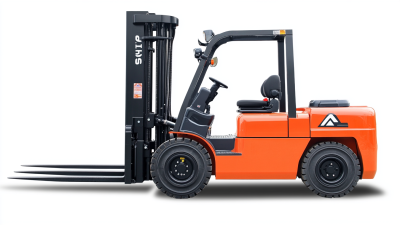
A scrap forklift is a heavy-duty lift truck built for demanding material handling yards. It moves steel bundles, machinery parts, pipes, and irregular scrap loads. Unlike a standard forklift, it often has a reinforced frame, solid tires, a high-capacity mast, and added protection around the operator. Its name describes the job, not poor quality.

The process looks simple. The forks slide beneath a load, while hydraulic cylinders raise the mast and carriage. A counterweight balances the lifted material during travel. Depending on the load, operators may use extended forks, clamps, or specialized attachments. Load shape matters as much as load weight. A loose steel bundle can shift suddenly, even when it stays below the rated capacity. Experienced operators keep loads low, travel slowly, and watch the load center. Small mistakes happen. They should still trigger a review.

Tips: Inspect forks, tires, chains, and hydraulic lines before each shift. Check the data plate and confirm the load’s weight and center. Keep people outside the travel path. Use clear signals in noisy yards. Never lift unstable material without securing it. A short test movement can reveal balance problems before the load reaches full height.

Which Heavy-Duty Handling Tasks Can a Scrap Forklift Perform?

A scrap forklift is designed for demanding work in recycling yards, metal shops, and industrial storage areas. It can move steel offcuts, cast parts, pipes, and heavy containers across uneven concrete. Its strong frame helps handle repeated impacts during loading and unloading. With suitable attachments, it can grab bulky bundles, position bins, and stack processed scrap safely.

It also supports truck loading, furnace-area supply, and short-distance movement between sorting stations. Operators must watch load balance carefully. Irregular scrap can shift without warning. In practice, the forklift’s rated capacity matters less when the load sits far from the forks. That detail is often overlooked.

Tips: Inspect forks, tires, hydraulics, and warning alarms before each shift. Keep loads low while traveling. Use clear signals near trucks and sorting equipment. Wet surfaces need slower turns. Do not exceed the machine’s rated capacity or use damaged attachments.

Choosing a scrap forklift requires matching its lift height, tire type, and attachment options to daily tasks. Solid tires may suit sharp debris, but they can transmit more vibration. Pneumatic tires may provide better comfort on rough yards. Visibility also matters when handling tall bins or dense bundles. A practical trial with real scrap is useful. It may reveal problems that specifications miss. I would also allow extra capacity, because scrap rarely forms a perfect load.

What Features Make Scrap Forklifts Suitable for Demanding Environments?

A scrap forklift is built for punishment, not showroom polish. In metal yards, sharp edges, dust, vibration, and uneven concrete quickly expose weak equipment. Useful features include a reinforced overhead guard, high-clearance undercarriage, sealed electrical connections, and puncture-resistant tires.

OSHA estimates that forklifts cause about 85 workplace deaths and 34,900 serious injuries annually in the United States. That figure makes visibility, braking, and operator restraint more important than extra lifting capacity. Safety is not decoration.

A suitable scrap forklift also needs a protected hydraulic system. Guarded hoses reduce damage when steel pieces shift near the mast. A wide-view mast helps operators track long loads without leaning around the frame. Load-backrest extensions, work lights, alarms, and cameras improve control in dusty or poorly lit areas. The Industrial Truck Association notes that stability depends on load center, weight, and operating conditions. That point is easy to miss. A five-ton rating cannot make an unstable load safe.

Maintenance details decide whether ruggedness becomes real value. Ask for accessible filters, grease points, fault diagnostics, and corrosion-resistant components. MHI’s 2024 Annual Industry Report identifies labor availability and operational efficiency as continuing material-handling concerns. Simpler service access can reduce avoidable downtime. Still, heavy duty is not a complete specification. I would inspect welds, tire wear, mast movement, and brake response under load before buying. A stronger chassis may survive abuse, but poor training or careless routing can defeat it. Some assumptions need challenging. The cheapest unit may cost more every wet, dirty shift.

How to Evaluate Capacity, Condition, Safety, and Operating Costs

Why Buy a Scrap Forklift for Heavy Duty Material Handling?

How to Evaluate Capacity, Condition, Safety, and Operating Costs

A scrap forklift can reduce purchase costs, but its capacity needs careful verification. Check the data plate, load chart, and mast configuration. A rated capacity of 5,000 pounds may apply only at a specific load center. Longer forks or raised loads can reduce stability. Measure your heaviest pallets, lifting height, and daily travel distance before inspecting any machine.

Condition matters more than paint. Examine the mast rails for scoring, weld repairs, and uneven movement. Inspect the forks for cracks, bending, and excessive heel wear. Check the tires, hydraulic hoses, steering joints, and overhead guard. Start the engine cold if possible. Blue smoke, hard starting, or loud hydraulic noise may signal expensive repairs. My first inspection missed a leaking cylinder because the oil was hidden under dust. That mistake changed my checklist.

Safety cannot be negotiated. Test the brakes, horn, lights, seat belt, parking brake, and reverse alarm. Confirm that the operator has clear visibility around the mast. A professional technician should assess the frame, hydraulics, and lifting system. Operating costs include fuel, batteries, tires, filters, repairs, and downtime. Request maintenance records, but treat incomplete records carefully. Cheap equipment becomes costly when it stops during a loaded shift. Compare the purchase price with twelve months of realistic service expenses, not optimistic guesses.

Why Buy a Scrap Forklift for Heavy-Duty Material Handling? — Capacity, Condition, Safety, and Operating-Cost Evaluation
Evaluation Area Practical Data Point Acceptable Benchmark Warning or Rejection Signal Effect on Purchase and Operating Costs
Rated Capacity Typical heavy-duty capacity classes 3,000 lb, 5,000 lb, 8,000 lb, or 10,000 lb at the specified load center Capacity plate is missing, unreadable, altered, or does not match the truck configuration Incorrect capacity creates a major overturn and structural-failure risk; replacing the truck is usually less costly than operating an underrated unit
Load Center Distance from the fork face to the load center Common ratings use a 24-inch load center for many counterbalance forklifts; confirm the exact rating on the data plate Loads are longer or more uneven than the rated load center, reducing practical lifting capacity A longer load center may require a higher-capacity forklift, reducing the financial benefit of buying scrap equipment
Mast and Lift Height Required lift height versus available height Rated lift height exceeds the highest storage position while maintaining adequate overhead clearance Twisted mast rails, damaged rollers, uneven chain movement, hydraulic drift, or visible weld repairs Mast repairs can be expensive and may require specialist labor; hydraulic leakage also increases downtime and fluid costs
Forks and Carriage Fork thickness, heel condition, locking pins, and carriage alignment Forks are straight, securely locked, evenly worn, and free from cracks or unauthorized repairs Cracks, bent forks, excessive heel wear, missing retainers, or a carriage that does not remain level Fork replacement is often more economical than repairing a damaged mast, but cracked forks should be removed from service immediately
Frame and Counterweight Structural integrity of the chassis and overhead guard No cracks in load-bearing areas; overhead guard, counterweight, and mounting points are secure Chassis cracks, severe corrosion, distorted overhead guard, loose counterweight, or evidence of a major collision Structural damage can make the forklift unsafe to certify and may eliminate any expected scrap-equipment savings
Engine or Motor Starting performance, noise, smoke, and operating stability Starts reliably, holds a steady idle, responds smoothly, and shows no excessive exhaust smoke or abnormal noise Low compression, heavy blow-by, overheating, unstable idle, severe oil leaks, or repeated starting problems Powertrain repair can exceed the purchase price; perform a loaded operating test before buying
Battery and Charging Battery age, voltage, charge retention, and connector condition Battery voltage matches the truck specification; it accepts a full charge and maintains usable capacity during a work cycle Swollen cells, cracked case, exposed plates, excessive corrosion, overheating, or rapid voltage loss under load A replacement industrial battery is a significant capital expense and must be included in the acquisition budget
Hydraulic System Lift, tilt, auxiliary functions, and leakage Functions operate smoothly, hold position under load, and show no active leaks at hoses, cylinders, or fittings Visible oil leakage, jerky movement, cylinder scoring, hose abrasion, or load drift when controls are released Leaks increase maintenance costs and can create slip, fire, and environmental hazards
Brakes and Steering Stopping distance, pedal feel, parking brake, and steering response Service and parking brakes hold the truck securely; steering is predictable with no excessive free play Brake fade, grinding, pull to one side, excessive steering play, or a parking brake that will not hold on a grade Brake or steering defects are safety-critical and should be repaired before the forklift is placed into service
Tires and Wheels Tire type, tread, sidewall condition, and wheel fasteners Solid pneumatic or cushion tires match the work surface and have no dangerous chunking, separation, or exposed damage Flat spots, deep cuts, separated rubber, damaged rims, loose wheel nuts, or tires unsuitable for the operating floor Tire replacement is a predictable cost, but operating with damaged tires reduces stability and increases vibration
Safety Equipment Seat belt, horn, lights, alarm, guards, and emergency controls All required safety devices function correctly and are securely mounted before operation Missing seat belt, failed horn, nonfunctional warning lights, damaged guard, or disabled backup alarm Safety repairs should be completed before use; operating without required equipment can create legal and insurance exposure
Fuel System For internal-combustion units: tank, lines, LPG fittings, and exhaust No fuel odor or leakage; hoses, regulators, tank mounts, and exhaust components are in good condition Damaged LPG connector, corroded tank, leaking fuel line, missing exhaust protection, or heavy carbon smoke Fuel-system defects create fire and exposure hazards and can increase fuel consumption and maintenance frequency
Operating Cost Basic cost categories to calculate Purchase price + transport + inspection + immediate repairs + tires/battery + scheduled maintenance + energy or fuel Decision is based only on the low purchase price without estimating parts, labor, downtime, and compliance work A low-cost scrap forklift is worthwhile only when the total first-year cost remains below the cost of a dependable used replacement
Downtime Risk Parts availability and repair support Common wear parts, tires, filters, seals, and safety components are available locally or through established suppliers Obsolete controls, unavailable transmission parts, undocumented modifications, or no qualified technician support Long repair delays can cost more than the equipment savings, especially in continuous material-handling operations
Purchase Decision Recommended use case Controlled environments, non-critical backup work, short operating hours, and buyers with repair capability Continuous production, hazardous areas, high pedestrian traffic, maximum lift heights, or loads near the rated limit Scrap forklifts can offer low entry cost and parts value, but reliability and safety should take priority over the lowest purchase price
All capacity ratings, load-center requirements, safety features, and operating limits must be verified against the forklift’s original data plate, applicable workplace regulations, and a qualified pre-use inspection. Cost results vary with condition, labor rates, energy prices, duty cycle, and parts availability.

How to Choose the Right Scrap Forklift for Your Facility

Why Buy a Scrap Forklift for Heavy Duty Material Handling?

Choosing the right scrap forklift starts with the worksite, not the advertised lifting capacity. Scrap yards create uneven floors, sharp edges, dust, and sudden load shifts. A forklift rated for 5,000 pounds may handle less when the load center extends beyond its rating. Check the data plate, attachment weight, and actual load center before purchasing.

OSHA reports that powered industrial trucks cause about 85 fatal accidents and 34,900 serious injuries annually in the United States. That makes stability, visibility, and operator protection essential selection criteria.

Choose pneumatic tires for broken concrete and outdoor surfaces. Consider a high-clearance mast when loads vary in shape. Enclosed cabs, overhead guards, and sealed electrical components can reduce exposure to dust and falling fragments. Service records matter more than polished paint. A low-cost unit can become an expensive mistake.

Tips:

Measure your narrowest aisle and loading height. Test the forklift with a representative scrap load. Inspect forks for bending, cracks, and uneven wear. Check brakes, steering, hydraulics, cooling systems, and warning alarms. Ask for a third-party inspection when maintenance history is incomplete. The Material Handling Industry’s 2024 industry report highlights ongoing investment in workforce safety and operational efficiency. However, new equipment alone cannot fix poor traffic routes. Mark pedestrian zones clearly, train operators, and review near misses. Even experienced teams sometimes underestimate changing scrap weight.